ACL R&D and pilot base
iHavos' R&D and pilot base for the ACL automatic leafy vegetable system — a full-scale testbed for moving leafy-green production from experience and manual labour to a standardised, automated and repeatable industrial line.
Project Overview
| Location | Taizhou, Jiangsu Province, China |
| Start | December 2025 |
| Focus | ACL automatic leafy vegetable system: seedling raising, robotic transplanting, two-stage spacing, tidal irrigation and climate control |
| Role | R&D centre · pilot production base · customer demonstration centre |
Design and iterate growing equipment and control systems from zero, building proprietary technology.
Load-test equipment and cultivation processes under real production conditions, and prove the full workflow.
A digital showroom and visitor route that shows customers, partners and investors the system running live.
ACL System
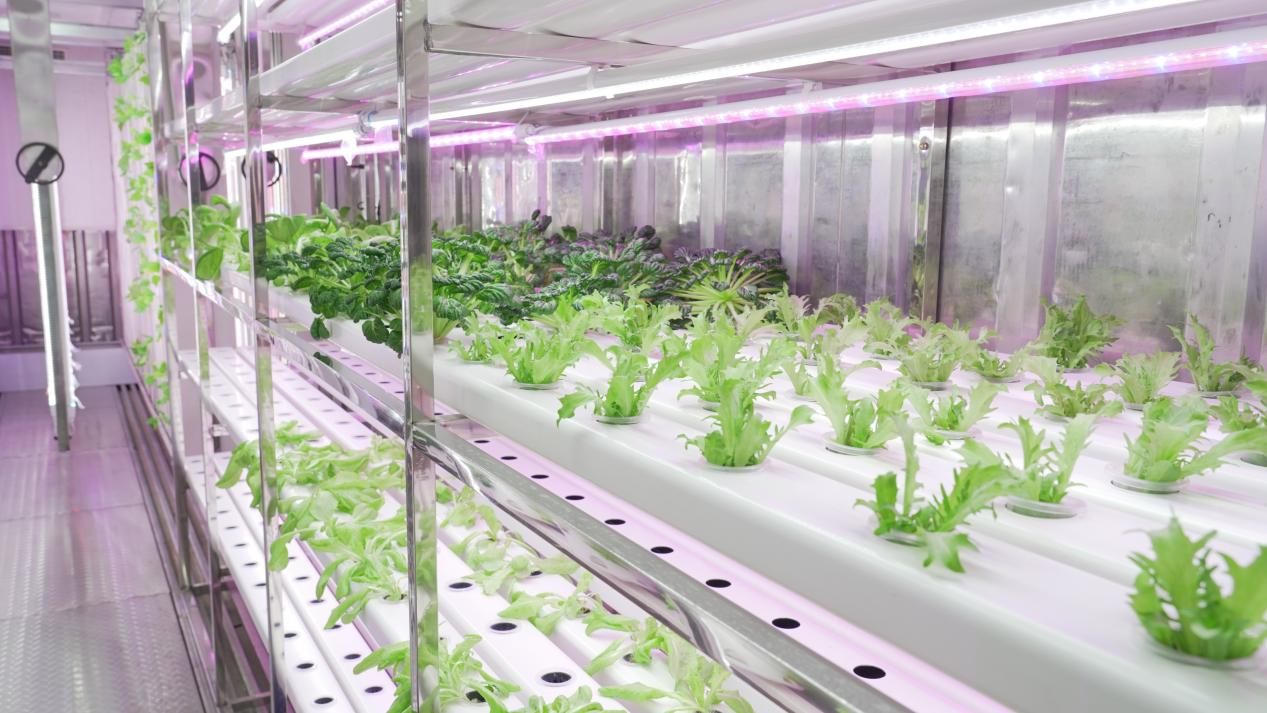
A skid-mounted, container-style seedling cabin integrates air conditioning, supplemental lighting, irrigation and sensor control. Trays interface precisely with the downstream transplanting and planting equipment.
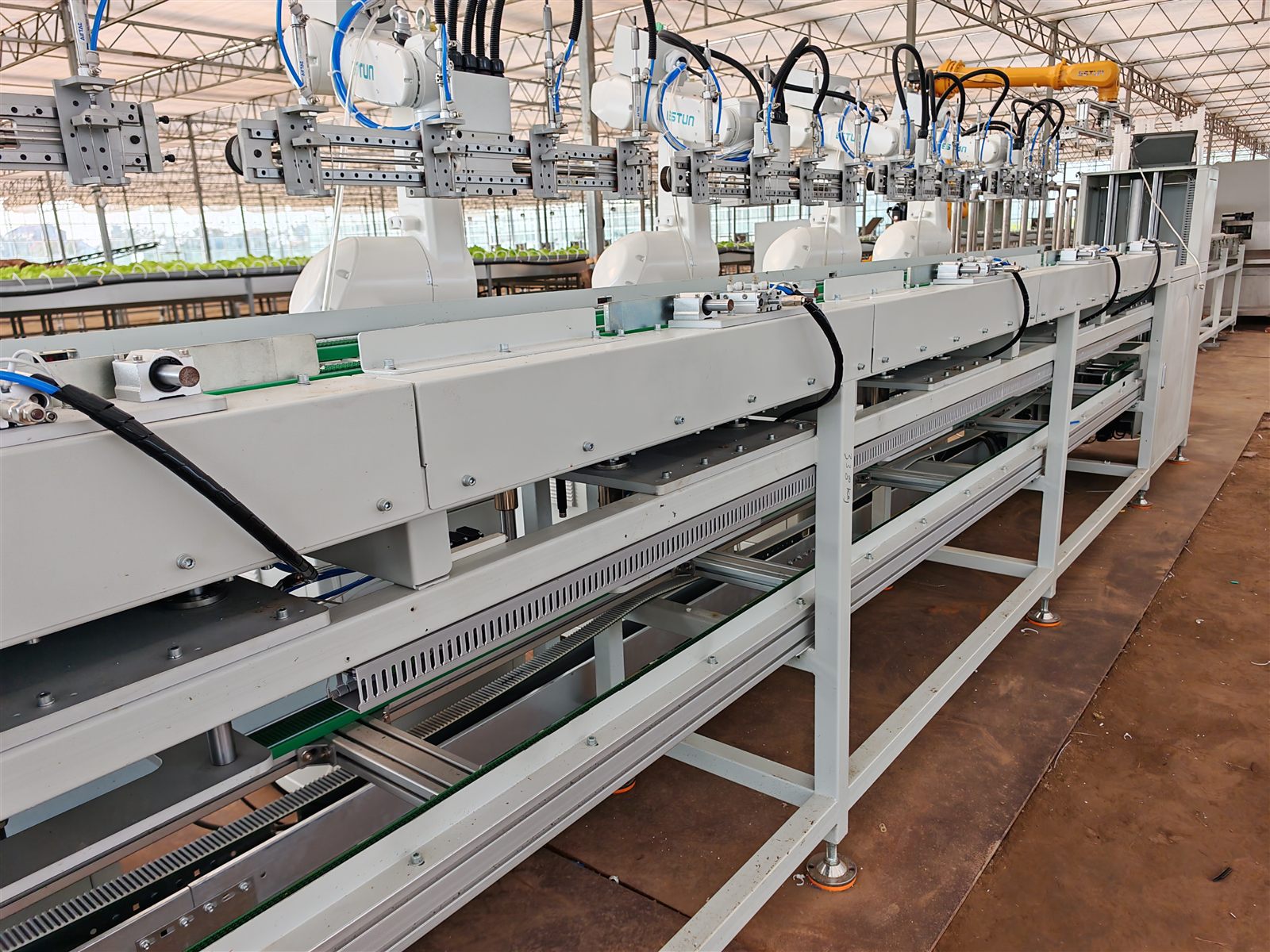
Five robots, each with four pneumatic grippers, work in a 20×1 array and complete a transplanting cycle in about 13 seconds. After gripper optimisation in April 2026, the success rate reached 99%.
| Stage | Typical duration | Layout |
|---|---|---|
| Nursery | Days 0–15 | High-density nursery racks with precise climate control |
| Dense spacing | Days 16–40 | About 150 mm spacing for rapid vegetative growth |
| Wide spacing | Days 41–60 | About 250 mm spacing to expand the canopy and plant size |
The 240-cell nursery tray matches the 20-hole growing tube — a 240:20 ratio designed jointly with the robot to protect transplanting rhythm and survival rate.
Water, Climate & Digital
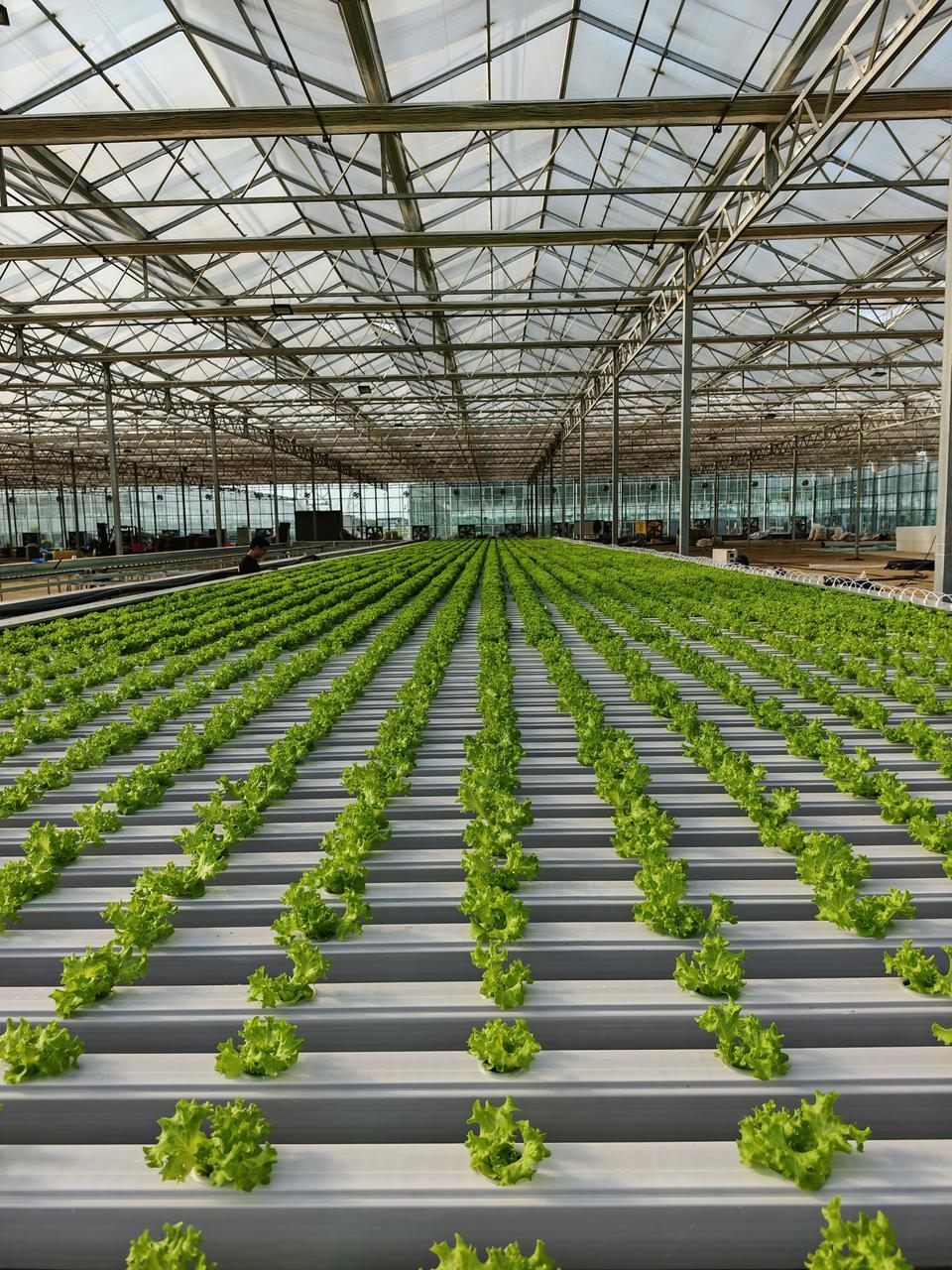
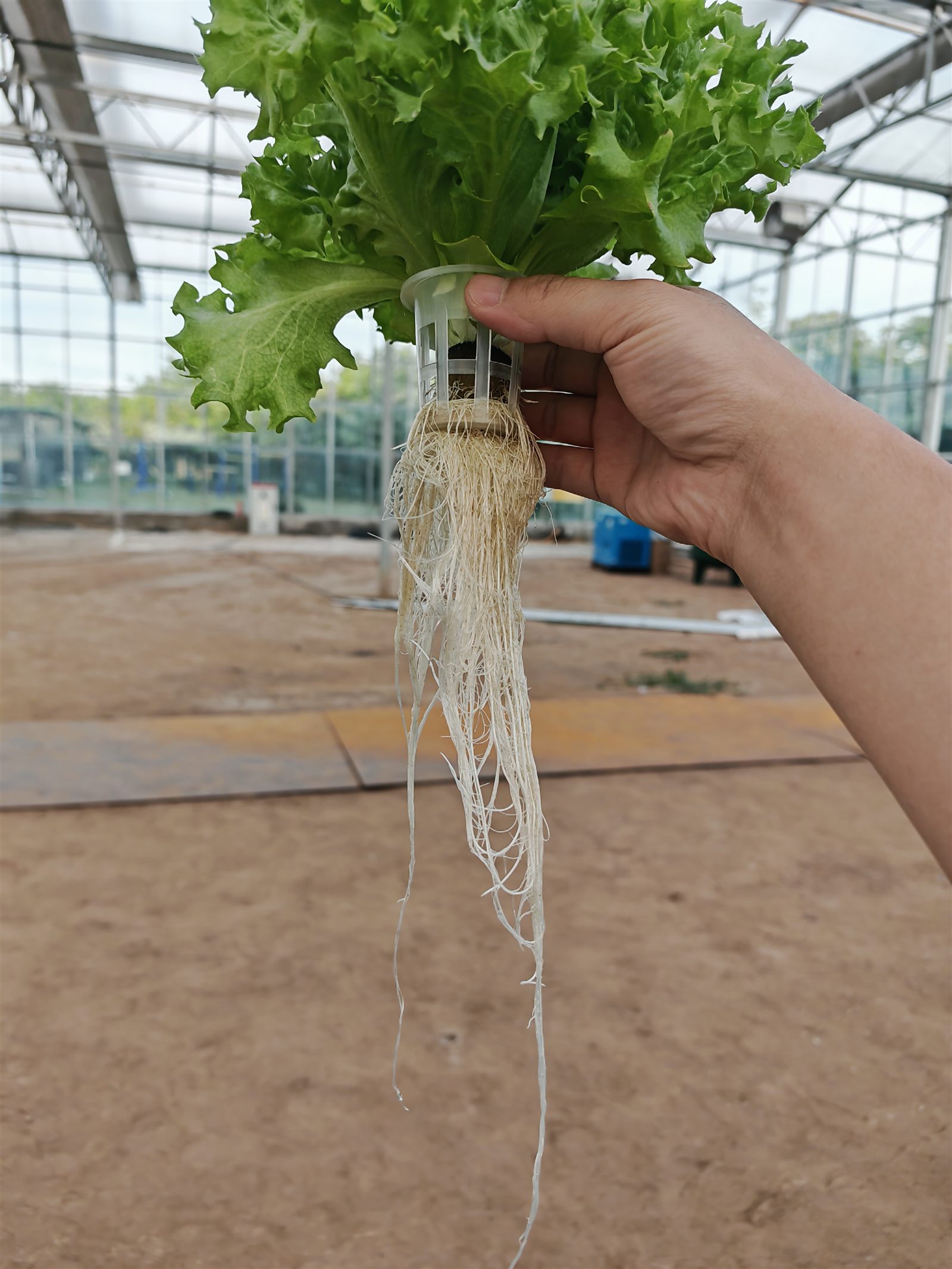
Tidal shallow-flow hydroponics circulates nutrient solution; UV sterilisation keeps the loop biologically safe with near-zero discharge. Heat exchange with the wet curtain keeps root-zone temperature at 18–20°C with very low energy input.
Weather data and greenhouse sensors feed a predictive model that adjusts fans, shading, wet curtains and irrigation to keep temperature, light, water, air and nutrients in balance. Distributed PLC control keeps each unit independent and scalable.
A digital twin and production dashboard bring line status, climate parameters and output data onto one screen, supporting remote monitoring, scheduling and visitor demonstration.
Trial Results
The base runs a weekly transplanting rhythm, covering six varieties at a time and continuously introducing new ones: Lugano loose-leaf, Romaine and butterhead lettuce; kale, endive, arugula, mustard and spinach; basil and mint. A baby-leaf short-cycle model is also being validated.
Timeline
| Time | Milestone |
|---|---|
| 2025.12 | Project started; advance team on site; site, utilities and seedling equipment prepared |
| 2026.01 | Growing line, transplanting line and container seedling cabin defined; assembly began |
| 2026.02–03 | Electrical and power systems in place; line trial run; robot programming and irrigation testing |
| 2026.04–05 | Lettuce trial; system named ACL; digital visitor route planned |
| 2026.06–08 | Line upgrade; strawberry and mushroom container concepts confirmed; multi-variety testing |
| 2026.09–10 | Robot branding, management dashboard, visitor corridor; 99% gripper success validated at scale |
The Taizhou base has a standard visitor route — from the digital twin dashboard to the transplanting robots and growing line. Customers, partners and investors are welcome.
